WHY DO YOU DO IT? WHAT DRIVES YOU?
There’s no other alternative. It’s not even purely for expression, more that I need somewhere to do whatever I want, no rules. Art is the most freeing space for that. Since I was a kid, when someone told me what to do, I was naturally going to do the opposite. So, as an adult, this is the more mature way to process that. Channelling my rebellion and making something out of that by building my own framework, my own rules. I need to be able to do things that I want, how I want, when I want, and art is the best avenue for that.
WHAT IS ONE THING YOU DO FOR SANITY MAINTENANCE?
Phone calls. Love a good phone call.

If we haven’t talked on the phone for more than an hour consecutively, I don’t even know if we’re real friends. Call to my mom, call to Sommer, call to Stacie. So many different routes. Going on a walk and having a phone call is a really nice way for me to regain sanity. I’m a verbal processor for sure.
WHAT IS THE SCRAPPIEST THING YOU’VE DONE FOr money?
Living off frozen pizza and Diet Coke and selling most of my belongings on Ebay.
YOUR TASK IS TO PRESCRIBE ONE BOOK OR FILM TO THE COLLECTIVE. WHAT IS IT?
BIG ART IN A ONE-HORSE TOWN, directed by Matthew Collings.
It addresses Donald Judd’s approach to the art world which was radical at the time, but is something I think a lot of artists can identify with now. He was participating in the New York scene, but then moved to a town to install his own art because he didn’t feel like he was getting the space he needed in New York. His approach to making opened things up for me. It personally gave me the authority. Whatever way I want to approach art is valid. I used to think I needed to name all my artworks, but he’s an artist with a lot of untitled work. You get to choose.
A lot of people look around at other artists and want to reference the work, but I think it’s important to reference philosophies. That is what drives a new visual language. I don’t want to make work that is similar to someone else’s. It’s about referencing the philosophy and building on an approach. I think anyone with their own vision or anyone interested in creativity and making could get that out of watching this film.
Current obsession?
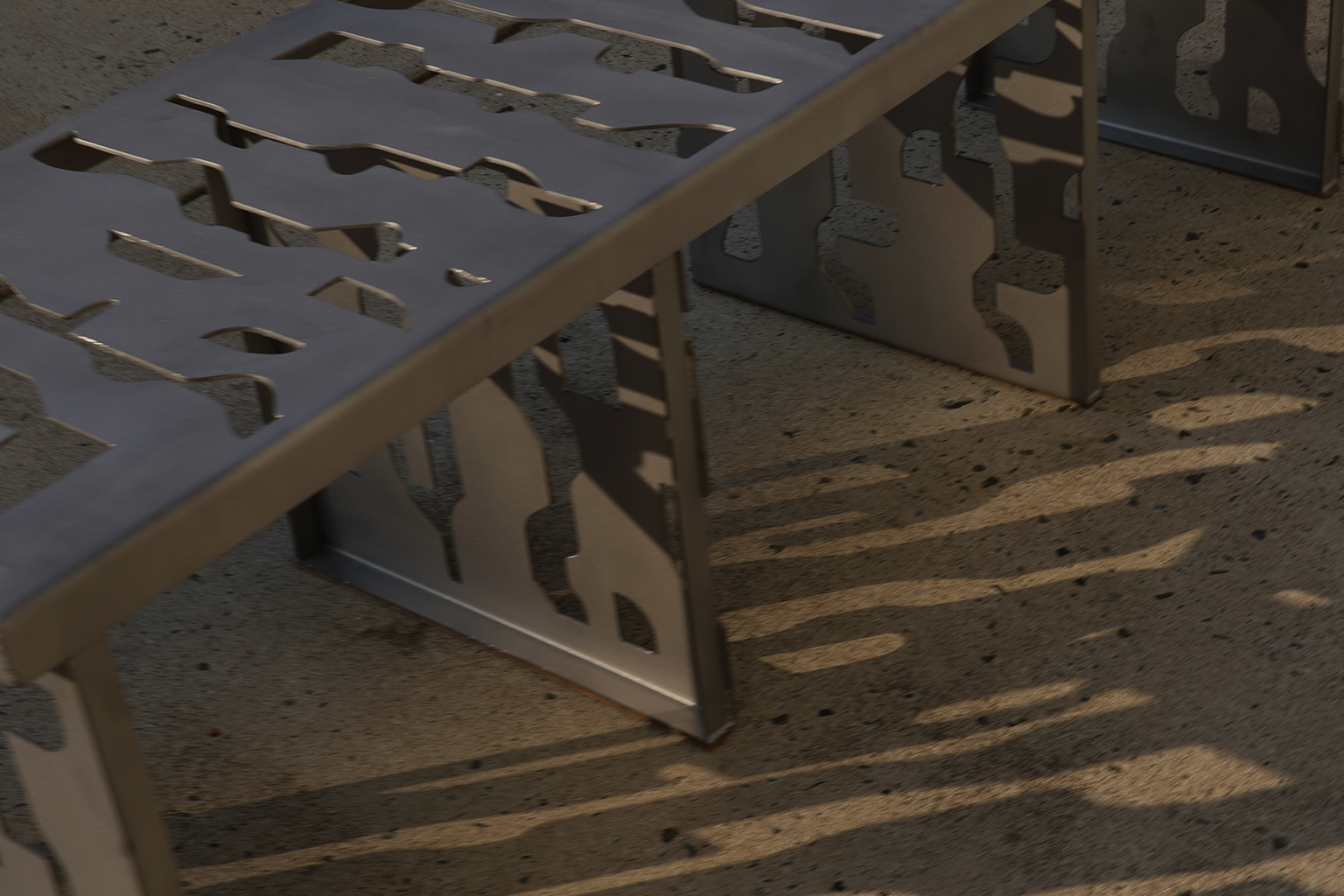
3D. I’ve been making paintings for years, and I’ve always wanted to see how they would feel in dimensional form. This is my first time really approaching that. With a painting, you’re controlling the dimensions of the canvas, the scale of the artwork, the scale of the colors and shapes within the artwork. Once you jump into making things three-dimensional, you have to think of scale in a whole different way. Walking up to a wall with a painting on it is a lot different than walking up to a structure, where you can look under it, look to the left, the right, you can stand above it, or you could stand inside of it. That opens up a world of possibilities you can’t get with a flat canvas.
MOST USEFUL FAILURE?
Some people might not think it’s a failure, but the failure that really stings the most is my time at [COMPANY] where I did so much work to get into the building. I used all of the tactics I’ve applied in my life: putting myself out there, doing the work, asking people for help, going the nontraditional route from the retail floor to the corporate office.

Once I got in the building, I wanted to start doing creative work there. There were so many people I reached out to, conversations and pitch meetings I had, so much effort and legwork and nothing came of it. Never in my life had I put that much energy into something and not gotten the result I wanted. I worked there for four years and it was really hard for me to sit with that. Putting that much energy into something and not seeing the result was hard for me, but now I’m noticing I am seeing the results in a different way that I didn’t anticipate before. It redirected my course. As enough time has gone by, I noticed, no matter if I got X, Y, Z title, it would still have been in the structure of someone else’s thing. The hierarchy and red tape doesn’t go away because you’re in a creative position. Now I see being within in a creative position would have almost been more frustrating because I’d be doing the thing I’m most interested in, but I’m still under the bureaucratic challenges. Even if it doesn’t seem like a failure, I see it that way and that failure has helped me redirect and put that energy back into my self. If I look at in hindsight, the reason I got to New York and got that job in the first place is because I’ve always put that energy into myself and my ideas—not toward someone else’s.
SELECTED Q FROM THE PROUST QUESTIONNAIRE: What is a virtue you think is overrated?
Turning the other cheek? Absolutely not. You confront that person. Confrontation doesn’t mean fist-fighting someone at a bar or looking for confrontation, but should confrontation come to you, you should handle that. Sometimes, to avoid confrontation in the future, it's best to address it head on in the moment. If you’re not learning that lesson, you’re going to keep meeting that.

I don’t believe in being walked all over. My case for spite is that spite is actually a great tool. There are ways it’s used that are unhealthy and there are ways that are healthy. Spite doesn’t mean deliberately getting back at someone. Someone doesn’t believe in you? You do that thing tenfold. Spite is a great motivator. Some people let roadblocks in their life deter their path or confidence instead of using that as fuel to amplify what is already in you. If someone throws a negative comment your way, don’t use that as a deterrent, use it as fuel. At the end of the day, they are dumping energy into you regardless if it’s positive or negative. You don’t need to worry about that. Everything is energy. It’d be worse if they didn’t acknowledge you at all. Negative energy is energy, take that and transform it into something positive for yourself. Convince them with your actions afterwards, and it’ll all come around in the end.
WHAT ARE YOU CURRENTLY WORKING ON?
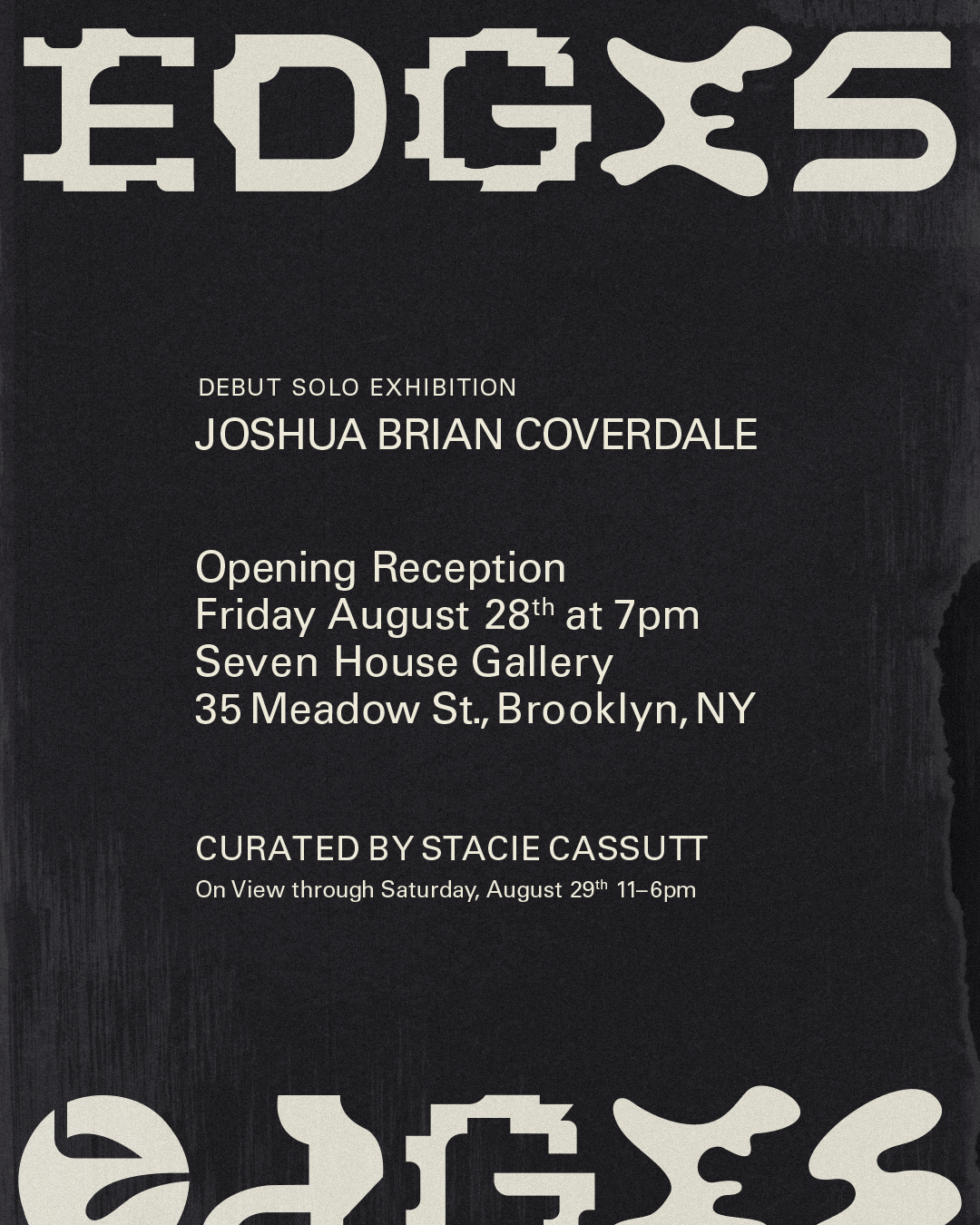
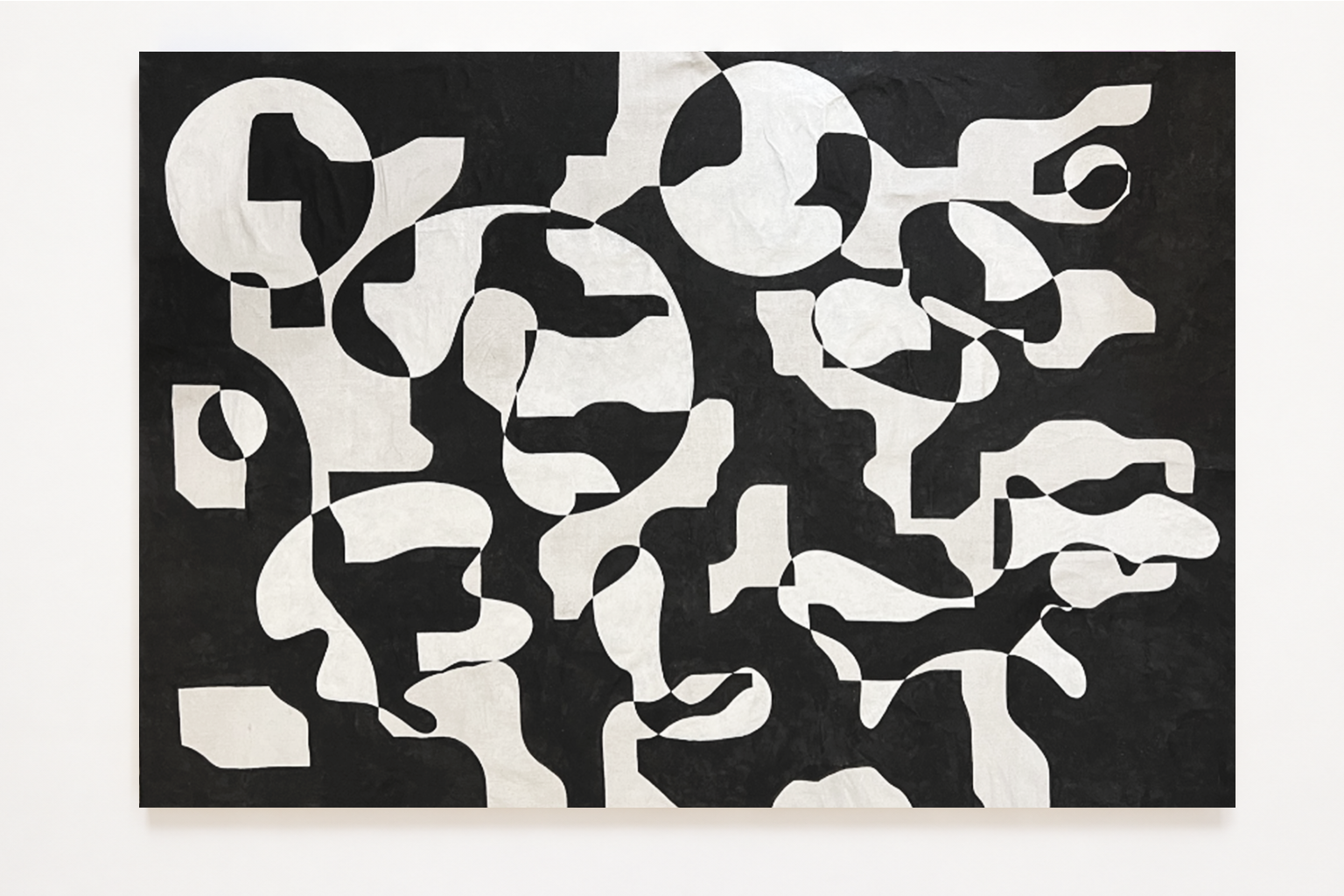
I am working on my upcoming solo exhibition, EDGES. I’ve been working on these paintings for ten months now. I wanted to make work with less material but not lose impact. The origin of the shapes in my work was to create negative space on the canvas without losing compositional detail or structure. The initial plan was to make a lot of this work and invite people in for studio visits. The idea to turn this into a show came up during the process which led to me making even more work.

I wanted to start taking my creative life more seriously. I wanted to make work at a large scale. So many ideas and so much evolution comes through the process of working. Taking on the challenge of building a structural object had to come through the process of making the other artworks. Having time to process my thoughts brings about new things.

There are new angles I’m exploring with collectible design, furniture, product, installation design. I’ve worked in some of these spaces, but not with my own art. Through the process of building this show, it’s opened up my eyes to how much further my art can breathe. It’s not just being in the studio, there’s a lot of different ways to approach being an artist. That’s what is exciting to me. The current project is EDGES, but it’s more what EDGES is opening up mentally for me.
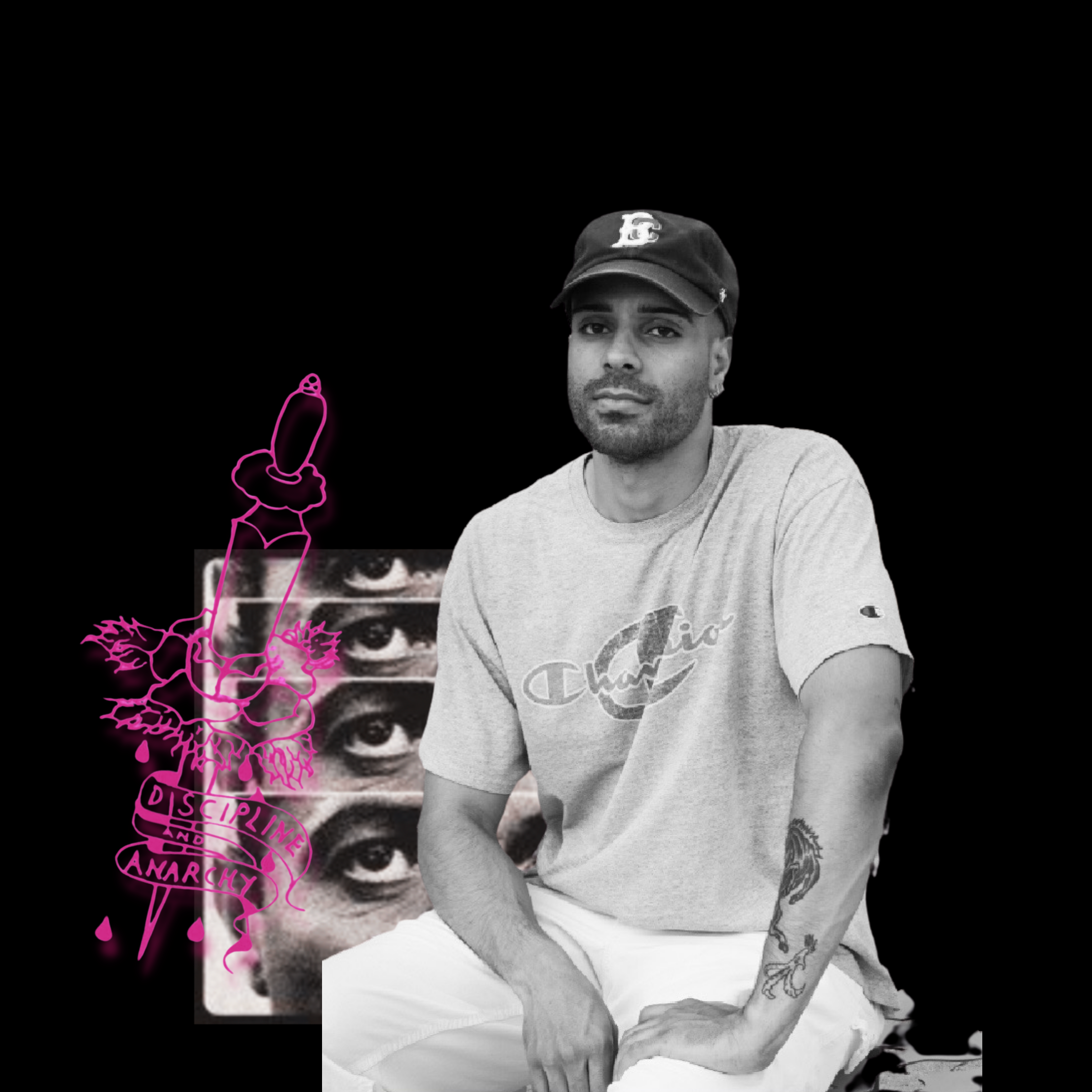
DISCIPLINE OR ANARCHY?
I think discipline is most important to me because you can’t be an anarchist if you don’t have discipline. Everyone has radical theories, but they don’t act on them. Discipline is required. You’re not going to change anything if you’re not disciplined.